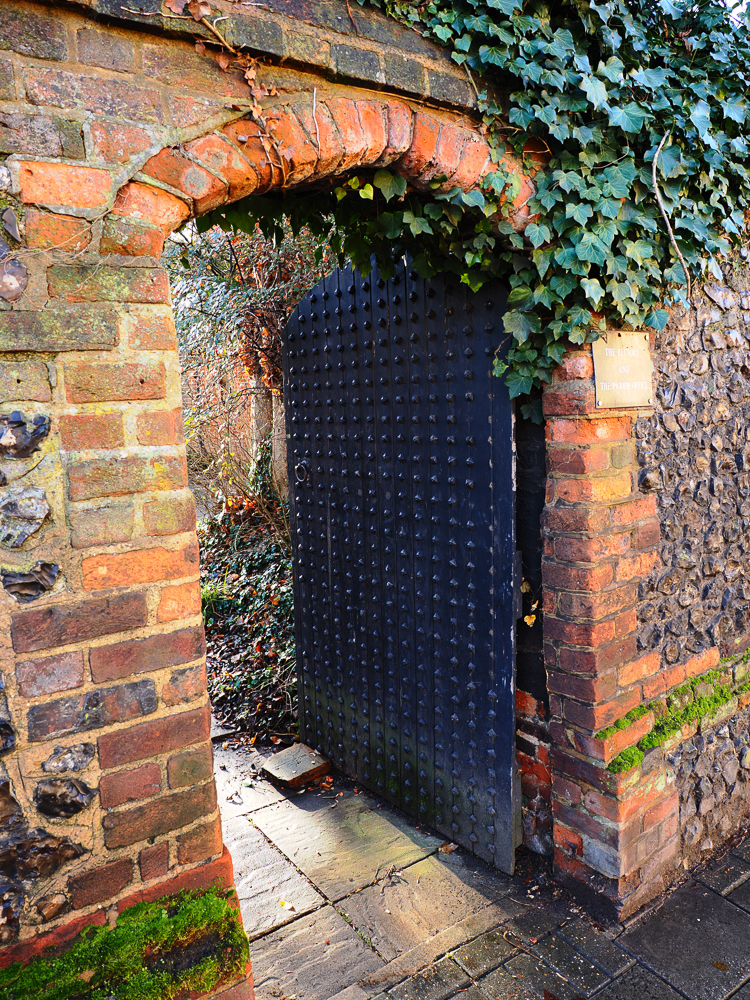
Hundreds of people walk or drive past this Grade II listed 10 feet high brick and flint wall alongside Gravel Hill in our town of Henley-on-Thames. It used to enclose Paradise House at a time in the 18th century when Gravel Hill and West Street were the red light district. Also, there were plenty of casual labourers in agricultural work in the area, some of which were laid off in the winter, and this seems to have led to lawlessness – and with harsh punishments such as being sent to the town’s whipping post. The area’s social disorder probably explains this substantial boundary to deter uninvited visitors. Nowadays, these walls and gate piers are Grade II listed.
It was Paradise House where Mary Blandy dined with Captain Cranstoun in 1746; eventually leading to her death penalty. Her guilt or innocence of murdering her father is part of Henley’s history and also the subject of Kenton Theatre debates. The house was demolished sometime in the 1950’s and the housing development of Milton Close built during the late 1960’s with the first residents moving in around 1970 when a 3 bedroom house cost in the region of £5,000!
The wall includes a surviving Gothic arch doorway and an entrance way with two gate piers at the upper end, complete with stone caps and ball finials. In the curves alongside these there are the stubs of iron decorations where most of the wrought iron was removed – supposedly for the WWII war effort. It leads to Milton Close, which with its location around where Paradise House was demolished, may have been named after John Milton’s epic poem “Paradise Lost”!


Leave a Reply