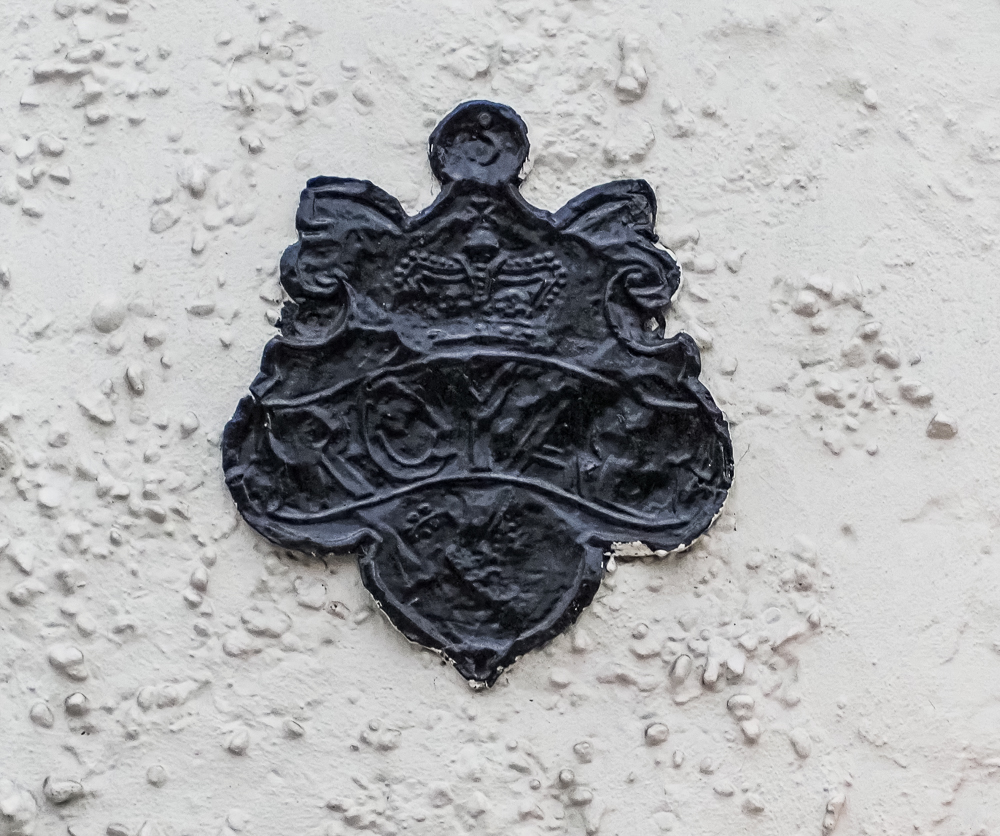
This is one of several metal plaques on old buildings in our town that signify that the property was insured against fire back in the 18th century. There are two on the front wall at The Bull on Bell Street, and another can be seen on a property in New Street, as well as elsewhere. Evidently, this old pub, restaurant and now also rooms has parts of the building that date to 1564, and I have also read that it was once a hospice for monks. However, back on the subject of a fire outbreak; without this marker the occupants who suffered fire damage or were rendered homeless could usually find themselves at the mercy of charity, and pleas for goodwill help were read out by the vicar at church. But influenced by the sweeping consequences of the Great Fire of London in 1666, the first fire insurance companies started to be formed and badges such as the Royal like the one in my picture were displayed on the insured structure. You may just be able to make out the name of the insurer and the some of the embellishment, including the crown towards the top, but the weather and time are steadily taking effect.
Many passers-by would not notice these plaques. But 200 years or more ago it was vital that it could be seen and verified – to ensure that firemen with Royal trade marks on their uniforms would get stuck in to fighting the fire. Without it, there are stories of crews who would turn up to fight a fire but then go home if the property did not have their insurance plate on it! Without insurance and before any organised civic fire brigades, it would have been down to the occupants, along with any willing neighbours, to take on basic fire fighting sometimes with water buckets drawn from the river and passed person to person. Could this story of fire crews sometimes letting the building burn really be true?


Leave a Reply